Water infiltration
Can you sell a house with water infiltration or a leaking roof in Quebec?
In shortYes. You can sell a Quebec house with water infiltration or a leaking roof once you say what you know, and no statute cited here makes a dry roof a condition of the deed. This is general information, not legal advice.
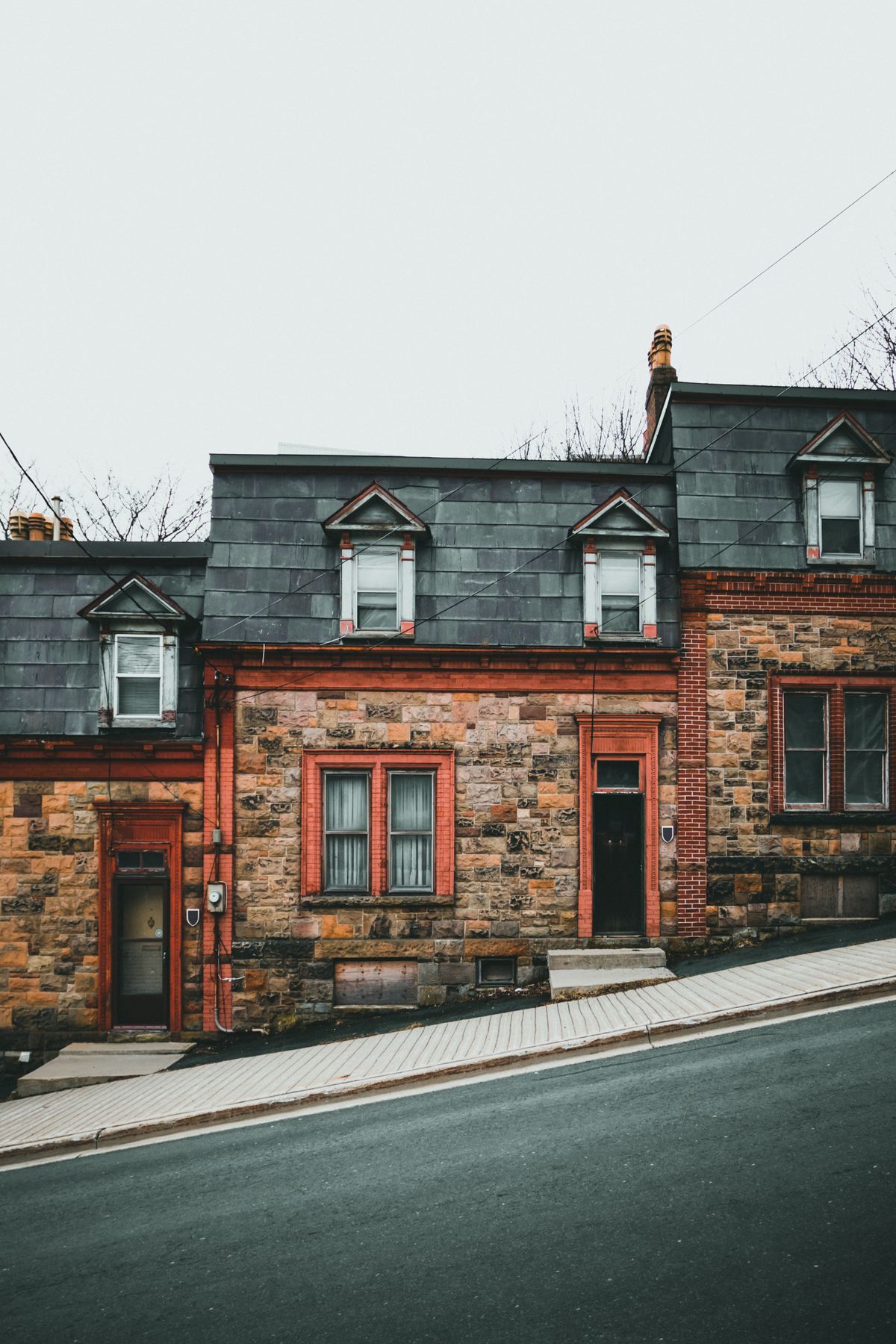
A stain, a drip, or a roof that has let water in is a fact about the house. What the seller’s form asks, and when that form is mandatory, is What goes in the seller’s declaration when you sell a house in Quebec?. A crack is a different page (Can you sell a house with foundation problems in Quebec?). A trace of mould is another (Can you sell a house with mould in Quebec?). Pyrite under a slab is another (Can you sell a house with pyrite in Montreal?). This page follows the City of Montréal, the OACIQ form DV, the Civil Code of Québec, Éducaloi and the Régie du bâtiment du Québec. It is general information from Bruce Malcolm, a private buyer. It is not legal advice, and it is not a price.
Can you sell a Quebec house that has water infiltration or a leaking roof?
Yes. No statute cited on this page forbids the sale because water has come in, or because the roof leaks. What the sale does not skip is saying what you know. A defect the buyer has been told about is not a hidden one. No statute cited here makes a repaired roof, or a dry ceiling, a condition of the deed.
What does Montréal require of an owner, and what is a rental inspection?
The City’s page on an owner’s duty to maintain a building, updated 18 March 2026, says that by-law 23-016 forbids letting a building deteriorate. As examples of what to maintain at a minimum, whether the building is occupied or vacant, that page names the roof among the exterior envelope, and the gutter among the exterior elements. For a vacant building, it names water infiltration or leaks that can cause significant damage to the envelope or the structure. No sentence on that page says a deed waits for a dry roof, or that signing cancels the duty (Entretien des bâtiments : vos obligations comme propriétaire, page in French).
A rental inspection is a different file. The City’s page for tenants says the dwelling must meet by-law 03-096, and that the owner is responsible for keeping the building’s components in good condition, including the roof. Its example of what to report includes a roof that leaks, and it names water infiltration among the signs of humidity. If the owner does not act within a reasonable time, the City’s teams may decide to inspect and require corrections (Locataire : vous avez droit à un logement en bon état, page in French). The inspection page says the team checks, among other things, water infiltration and the condition of the roof and the building envelope, and uses devices to detect humidity or water infiltration (Inspection d’un logement locatif, page in French). The request page says water infiltration in the dwelling is one of the priority situations in which a person can contact the City directly, at 311 (Demander une inspection dans un logement, page in French). The topic page says the City has the right to intervene in a rental dwelling. No page cited here says an owner-occupied deed waits for that inspection. The pages do not name a borough. If you already have a notice or an inspection record, you keep it and you say what you know.
What do you declare about infiltration and the roof?
On the French PDF read for this page, marked DV 00001 and V24, copyright 2012 and 2022, the answers are to your knowledge and in good faith. The English PDF of the form, read for the English wording, shows V17 in the margin. The items below follow the French V24 wording. This page does not call the two files one edition (Déclarations du vendeur sur l’immeuble, form DV, page in French).
D4 is damage caused by water. D4.1 asks whether there has ever been water infiltration, and where. The places are the basement or crawl space, the roof, a patio, a balcony, a solarium, a skylight, a door, a window, a chimney, or another place you name. D4.2 asks whether a water leak has caused damage, and where the leak came from. The named sources are a dishwasher, a washing machine, a refrigerator, a water heater, a toilet, a shower, a bath, or other. A roof is a D4.1 place. It is not one of those named appliances. D3.6 asks whether water accumulates periodically on the land. That is not the roof question. D5.2 asks whether the basement or crawl space has had problems, and a foundation crack is one of the boxes. That crack is the foundation page already cited.
D8 is the roof. D8.1 asks the type of roof covering: don’t know, asphalt shingles, cedar shingles, bitumen and gravel, an elastomeric membrane, sheet metal, or other. D8.2 asks the year the covering was installed, or don’t know. D8.3 asks whether you have documents evidencing the replacement of the roof covering. D8.4 asks whether the roof requires regular maintenance, and how often. D8.5 asks the type of insulation in the attic: don’t know, mineral wool, vermiculite, urethane, or other. Vermiculite is a different page (Can you sell a house with asbestos or vermiculite in Quebec?). D8.6 asks whether ice or icicles have regularly accumulated at the edge of the roof. D7.3 asks whether there have been traces of mould, rot or fungi. That trace is the mould page already cited.
D13.1 asks whether the immovable has been inspected, and whether you can provide the reports. D13.2 asks whether other tests or expert reports have been done. It names several, including the foundation drain, and “or other.” D14.1 asks whether, in addition to what is already mentioned, the immovable has sustained damage from an ice storm, a wind storm, a flood, a fire, or another event. D14.4 asks whether major work, other than what is already mentioned, has been done. Its examples are a change to how the rooms are divided, and a change of floor covering. It then asks whether drawings and specifications were prepared, and whether the required permits were issued. D14.5 asks whether anything else could affect the value, the income, the expenses or the use. D15 is where the detail goes: the nature of the event, the place, and how the situation was dealt with. If there is not enough room, the form says Annex G – General can be used, and that you provide the available documents that support the declarations.
The OACIQ’s English page says that water damage or infiltration must be declared even if it was remedied, because it may cause long-term damage, and that the remedial work is then mentioned, if any, with the invoices and supporting documents (A report card on a property). The French page read for the threshold says the form is mandatory for a sale by a natural person of a chiefly residential immovable of fewer than 5 dwellings, including divided co-ownership or undivided ownership. It says that, for 5 dwellings or more, a chiefly commercial immovable, land without a building, or a legal person, the form is not mandatory and the OACIQ strongly recommends it. If the person selling refuses to provide the information or to sign, the broker cannot represent them for the sale. The English page’s sentence on that second group says “more than five dwellings.” This page does not merge the two (Le CV de la propriété, page in French). When the form is the path, and when it is not, is the declaration page already cited. On a sale with no broker, you still say what you know, in writing (How do you sell a house without a real estate broker in Quebec?).
What does the legal warranty still require?
Article 1726 says the seller warrants that, at the time of the sale, the property and its accessories are free of latent defects which render it unfit for the use for which it was intended, or which so diminish its usefulness that the buyer would not have bought it or paid so high a price if he had been aware of them. The seller is not bound to warrant a latent defect known to the buyer, or an apparent defect. An apparent defect is one a prudent and diligent buyer can perceive without an expert (Civil Code of Québec, article 1726). Article 1727 is a different event. If the property perishes because of a latent defect that existed at the sale, the loss falls on the seller, who must restore the price. If the loss results from superior force, or from the buyer’s fault, the buyer deducts the value of the property in the state it was in when the loss occurred. This page does not decide when a leak is that loss (Civil Code of Québec, article 1727). Article 1728 says that if the seller was aware of the latent defect, or could not have been unaware of it, the seller is bound not only to restore the price, but also to make reparation for the injury the buyer suffered (Civil Code of Québec, article 1728).
Article 1729 is a presumption. In a sale by a professional seller, a defect is presumed to have existed at the time of the sale when the property malfunctions or deteriorates prematurely compared with identical property, or property of the same kind. The presumption is rebutted if the defect is due to the buyer’s misuse. The article names a professional seller. It does not name the owner who sells their house (Civil Code of Québec, article 1729). Article 1730 is also a different person. It binds the manufacturer, any person who distributes the property under their name or as their own, and any supplier, in particular an importer, to a seller’s warranty (Civil Code of Québec, article 1730). The article names those persons. It does not name the owner who sells their house. Article 1731 says a sale made under judicial authority gives rise to no warranty of quality. This page is not that sale (Civil Code of Québec, article 1731).
Article 1732 says the parties may add to the warranty, diminish its effects or exclude it, but in no case may the seller exempt himself from his personal acts. The French text’s words are “ses faits personnels” (Civil Code of Québec, article 1732). Article 1733 says a seller may not exclude or limit liability unless the defects he was aware of, or could not have been unaware of, and which affect the right of ownership or the quality of the property, were disclosed. The same article makes an exception where a buyer buys at his own risk from a seller who is not a professional seller (Civil Code of Québec, article 1733). The exception is not a permission to stay silent.
Éducaloi says that, if the exclusion is real, the claim for a hidden defect is what is given up, and what remains is to show that the seller deliberately hid something so important that the buyer would not have bought, or would not have paid the same price (Immobilier : acheter sans garantie légale, page in French). The OACIQ says that the waiver will not protect the seller against an action for defects of which he was aware and which he should have disclosed (The legal warranty of ownership and quality). How the clause is written is Selling a house as-is in Quebec. A notary or a lawyer reads the clause. This page does not.
What papers do you gather?
The papers the form itself names. D8.3 is the documents evidencing replacement of the roof covering, if you have them. The OACIQ’s page already cited asks for the invoices and the supporting documents when water damage or infiltration is declared, including where the problem was dealt with. D13 is an inspection report or another expert report you already have, and whether you can provide it. D15 is the nature of the event, the place, and how the situation was dealt with. A City or borough notice, or a rental-inspection record, if you already have one, is a paper you can put with that file. No page cited here says you must obtain a new City inspection in order to sign. The deed, the certificate of location and the tax bills are a different list (What documents do I need to sell a house in Quebec?).
Who may do covering work, and does Bruce do it?
Not Bruce. Subcategory 7 of Annex III of the Regulation respecting the professional qualification of contractors and owner-builders, B-1.1, r. 9, is the contractor in insulation, waterproofing, roof coverings and exterior cladding. LégisQuébec shows that annex in force on 12 February 2026. The subcategory authorizes construction work concerning fireproofing, waterproofing, insulation, pipe insulation, roof coverings, and exterior wall cladding other than masonry, and similar or related work. The text says “couvertures.” It does not say a deed requires that work (Annexe III, subcategory 7, page in French). The RBQ’s page is where a licence is checked in the register, including the subcategories on it (Vérifier la licence d’un entrepreneur, page in French). Bruce does not assess the roof and does not repair it.
What are the ways to sell, including a direct sale as it stands?
Two paths are not the same promise. You can sell with the infiltration and the roof as they are, and say what you know, on the form when that form is used and in writing when it is not. Selling without the legal warranty is a clause in the promise and the deed. It does not cover a problem you knew and did not disclose. The City’s maintenance rule, if it applies to the building, remains the City’s. No page cited here says the deed erases it.
A direct sale is a further path. Bruce Malcolm buys houses himself on the Island of Montreal and the surrounding areas. He holds no broker, agent, appraiser, inspector or roofer licence, and he is not an advisor. There is no inspection and no commission. An offer with no inspection condition does not, by itself, set aside the legal warranty of quality. You say what you know about the water and the roof when you send the address: where it came in if you know it, whether it is still happening, any report, any City or borough notice, and any work already done. He does not repair the roof. The closing date is one you choose once the notary can sign. Sending the address starts a conversation (request an offer). The form does not commit you. A notary or a lawyer reads the deed.
Can you sell?
What the source says. No statute cited here forbids the sale because water has come in or the roof leaks. You say what you know. A defect the buyer has been told about is not a hidden one. A dry roof is not a condition of the deed.
Where it is written. Civil Code, art. 1726
The City
What the source says. By-law 23-016, as the City’s page states it, forbids letting a building deteriorate. The roof is named among what an owner maintains, occupied or vacant. A rental inspection under by-law 03-096 can look at infiltration and the roof. No page cited here says the deed waits for that inspection.
Where it is written. City of Montréal
The form
What the source says. D4.1 is water infiltration, and the roof is one place. D4.2 is a leak that caused damage, and its named sources are appliances, plus other. D8 is the covering, the year, the documents, maintenance, the attic, and ice at the edge. The detail is D15.
Where it is written. OACIQ form DV
Without legal warranty
What the source says. Articles 1726 and 1728 are the warranty. Article 1729’s presumption names a professional seller. Article 1730 names the manufacturer, a distributor and a supplier, not the owner. A sale at the buyer’s risk does not excuse silence about a known defect.
Where it is written. Arts. 1732 and 1733; Éducaloi
Who does the work
What the source says. Subcategory 7 of Annex III authorizes work concerning roof coverings, among other things. Bruce does not assess the roof and does not repair it.
Where it is written. B-1.1, r. 9; RBQ
Direct offer
What the source says. No inspection and no commission. An offer with no inspection condition does not, by itself, set aside the legal warranty of quality. Bruce does not repair the roof.
Where it is written. The offer on this site
| Question | What the source says | Where it is written |
|---|---|---|
| Can you sell? | No statute cited here forbids the sale because water has come in or the roof leaks. You say what you know. A defect the buyer has been told about is not a hidden one. A dry roof is not a condition of the deed. | Civil Code, art. 1726 |
| The City | By-law 23-016, as the City’s page states it, forbids letting a building deteriorate. The roof is named among what an owner maintains, occupied or vacant. A rental inspection under by-law 03-096 can look at infiltration and the roof. No page cited here says the deed waits for that inspection. | City of Montréal |
| The form | D4.1 is water infiltration, and the roof is one place. D4.2 is a leak that caused damage, and its named sources are appliances, plus other. D8 is the covering, the year, the documents, maintenance, the attic, and ice at the edge. The detail is D15. | OACIQ form DV |
| Without legal warranty | Articles 1726 and 1728 are the warranty. Article 1729’s presumption names a professional seller. Article 1730 names the manufacturer, a distributor and a supplier, not the owner. A sale at the buyer’s risk does not excuse silence about a known defect. | Arts. 1732 and 1733; Éducaloi |
| Who does the work | Subcategory 7 of Annex III authorizes work concerning roof coverings, among other things. Bruce does not assess the roof and does not repair it. | B-1.1, r. 9; RBQ |
| Direct offer | No inspection and no commission. An offer with no inspection condition does not, by itself, set aside the legal warranty of quality. Bruce does not repair the roof. | The offer on this site |
Water infiltration, a leaking roof, and a Quebec sale
Sources
- Ville de Montréal, Entretien des bâtiments : vos obligations comme propriétaire (updated 18 March 2026; by-law 23-016)
- Ville de Montréal, Locataire : vous avez droit à un logement en bon état (by-law 03-096; a roof that leaks)
- Ville de Montréal, Inspection d’un logement locatif : à quoi s’attendre (water infiltration and the roof)
- Ville de Montréal, Demander une inspection dans un logement (water infiltration is a priority; 311)
- Ville de Montréal, Salubrité, entretien et sécurité des logements (updated 9 January 2026; the City may intervene in a rental dwelling)
- OACIQ, Déclarations du vendeur sur l’immeuble, form DV (PDF, DV 00001, V24)
- OACIQ, Declarations by the seller of the immovable (PDF; margin reads V17)
- OACIQ, A report card on a property (water damage or infiltration, even if remedied)
- OACIQ, Le CV de la propriété (fewer than 5 dwellings; 5 dwellings or more)
- Civil Code of Québec, article 1726 (warranty of quality)
- Civil Code of Québec, article 1727 (loss caused by a latent defect)
- Civil Code of Québec, article 1728 (seller who was aware or could not have been unaware)
- Civil Code of Québec, article 1729 (presumption in a sale by a professional seller)
- Civil Code of Québec, article 1730 (manufacturer, distributor, supplier)
- Civil Code of Québec, article 1731 (sale under judicial authority)
- Civil Code of Québec, article 1732 (exclusion, and personal acts)
- Civil Code of Québec, article 1733 (disclosure, and a sale at the buyer’s risk from a non-professional seller)
- OACIQ, The legal warranty of ownership and quality
- Éducaloi, Immobilier : acheter sans garantie légale (page in French)
- LégisQuébec, B-1.1, r. 9, Annex III, subcategory 7 (in force 12 February 2026)
- Régie du bâtiment du Québec, Vérifier la licence d’un entrepreneur
Questions people ask
Keep reading
- What goes in the seller’s declaration when you sell a house in Quebec?On a brokered sale, the OACIQ form records what you know. A private sale has no mandatory form, and a sale without legal warranty is not a reason to hide a known defect.
- Selling a house as-is in QuebecAs-is means the legal warranty can be set aside. It does not mean a known defect can be hidden.
- Can you sell a house with mould in Quebec?You can sell a Quebec house with mould. Say what you know. A sale at the buyer’s risk does not cover a defect you hid.
- Can you sell a house with foundation problems in Quebec?You can sell a Quebec house with a foundation problem. Say what you know. A sale at the buyer’s risk does not cover a defect you hid.
- Can you sell a house with pyrite in Montreal?Yes. A Montreal house with pyrite under the slab can be sold if you say what you know. A sale without the legal warranty does not remove that duty.
- Can you sell a house with asbestos or vermiculite in Quebec?Yes. A Quebec house with asbestos or vermiculite can be sold if you say what you know. A sale without the legal warranty does not remove that duty.
- What documents do I need to sell a house in Quebec?The deed, a current certificate of location, tax bills and your mortgage balance are the core. Here is what to do when one is missing.
- How do you sell a house without a real estate broker in Quebec?You can sell your own house in Quebec without a broker. The Act licences the intermediary, not the owner. You still say what you know, and the promise and the notary remain.
This is general information about how a sale usually works in Quebec. It is not legal, tax or financial advice, and it is not a promise about your price or your date. A notary — and, if your file needs it, a lawyer or a licensed insolvency trustee — applies the rules to your situation. Sending an address does not commit you to sell.