Asbestos and vermiculite
Can you sell a house with asbestos or vermiculite in Quebec?
In shortYes. You can sell a house with asbestos or vermiculite in Quebec once you say what you know, since no page cited here forbids the sale because the material is still there and none makes a laboratory test a condition of the deed. This is general information, not legal advice.
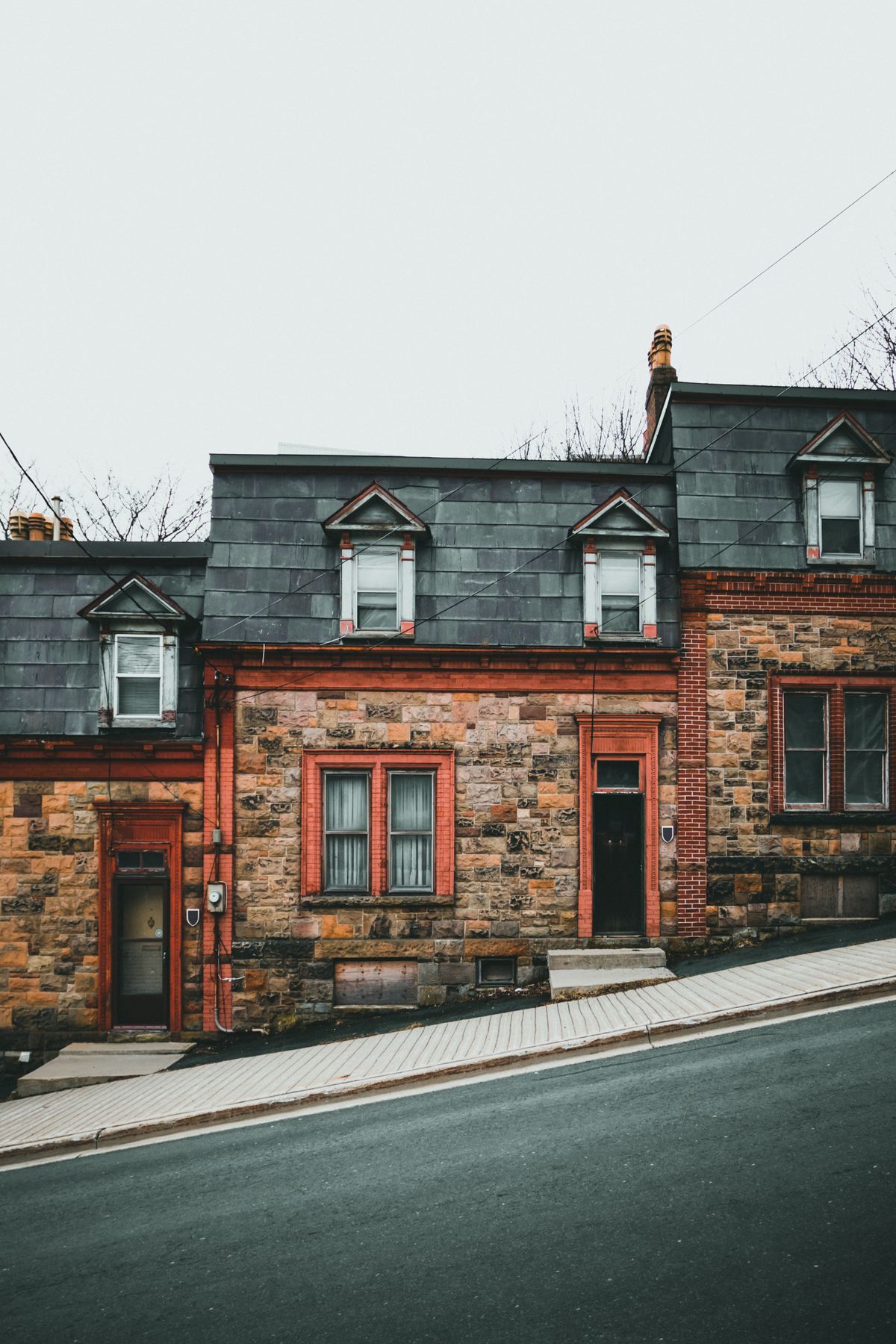
The material is one fact about the house. When the seller’s form is mandatory, and what else it asks, is What goes in the seller’s declaration when you sell a house in Quebec?. The other papers in a file are in What documents do I need to sell a house in Quebec?. This page follows the Civil Code of Québec, the OACIQ, Health Canada, Québec.ca, the INSPQ, the CNESST and Éducaloi. It is general information from Bruce Malcolm, a private buyer. It is not legal advice, and it is not a price.
Can you sell a house with asbestos or vermiculite in Quebec?
Yes. No page cited here forbids the sale of a house because asbestos, or vermiculite that may contain it, is still in the building. What the sale does not skip is saying what you know. A defect the buyer has been told about is not a hidden one.
Health Canada says the manufacture, import, sale and use of products containing asbestos is prohibited in Canada, and that the regulations introduced in 2018 prohibit the import, sale and use of asbestos and the manufacture, import, sale and use of products containing asbestos, with a limited number of exclusions. The same page says asbestos may still be found in older building materials. It does not say a house that still contains those materials cannot be sold (Asbestos and your health).
The OACIQ page on asbestos fibres is written for licence holders. It says the Prohibition of Asbestos and Products Containing Asbestos Regulations came into force on 30 December 2018, and that they prohibit the import, sale and use of asbestos and the manufacture, import, sale and use of products containing asbestos, with a limited number of exclusions. It then tells the broker what to disclose. It does not say the sale of the house is forbidden (Asbestos fiber). Québec.ca, on a page updated 12 January 2021, says some materials containing asbestos, mainly asbestos-cement, are still offered on the market, for example in pipes or heat shields for fireplaces. This page does not decide which product falls in an exclusion (Prévenir les effets de l’amiante sur la santé).
Where do the official pages say asbestos and vermiculite are found?
Québec.ca says products and materials containing asbestos fibres were long used in building because they resist heat and absorb noise, and that the construction industry in Quebec used them especially between the 1930s and 1990. It says it is therefore possible to find asbestos in various places in residential buildings built or altered in that period. The page’s figure names, among other things, roofing felt, building paper and shingles, loose-fill insulation such as vermiculite, acoustic tiles or a sound-dampening ceiling, caulking around windows, wall and ceiling finishes such as stucco and patching of gypsum panels, vinyl floor tiles, linoleum and adhesives, insulation on pipes and on electrical wires, the main electrical panel, the insulation, tape and seals of a furnace or a water heater, a fireplace or wood stove, exterior cladding such as stucco or asbestos-cement siding, and asbestos-cement gutters. The figure is a list of possible sources. It is not a finding about one house.
Health Canada’s current page says that before 1990 asbestos was mainly used to insulate buildings and homes against cold and noise, and for fireproofing. Its list of older materials includes house siding, cement and plaster, floor and ceiling tiles, roofing, surface treatments such as paint, putty, drywall, caulking, sealants and spackling, industrial furnaces and heating systems, and insulation, including around hot water pipes and tanks. That list is not the same sentence as Québec.ca’s figure. Both pages are describing older materials. Neither page says every older house contains them.
Vermiculite is the insulation those pages describe, not a second mineral this page will define on its own. Québec.ca says it comes as granules whose colour runs from silver-gold to grey-brown, and that it was once used to insulate the attic, which the page calls the entretoit: a garret, an attic with an access hatch, a mansard. It says some vermiculite insulation marketed between 1920 and 1990 may contain asbestos fibres. If the attic contains vermiculite, or you suspect that it does, the page says to limit access, to tell anyone who must go in, to store nothing there, to wear a particle-filtering mask and stay only briefly if you must go in, to have a qualified professional remove the insulation or do other work in the attic, never to try to remove it yourself, to seal cracks or openings between the ceiling and the attic, and to caulk the access door and around light fixtures. Those are instructions about the attic. They are not a condition of the deed.
Health Canada’s advisory of 3 April 2004 says vermiculite ore from the Libby mine in Montana, from the 1920s to 1990, may contain asbestos, that the mine supplied the majority of the world market in vermiculite insulation, mostly sold under the brand name Zonolite, and that not all vermiculite insulation produced before 1990 contains asbestos. It says that, in the absence of evidence to the contrary, it is prudent to assume that vermiculite insulation produced before 1990 may contain some asbestos. It says there is currently no evidence of a risk to health if the insulation remains sealed behind wallboards and floorboards, isolated in an attic, or otherwise kept from exposure to the interior environment, and that the best way to minimize the risk is to avoid disturbing it (Health Canada advisory, 3 April 2004). The current Health Canada page does not repeat the name Zonolite. It says vermiculite-based insulation may contain asbestos, and, if it is in the attic or the walls, not to use the attic for storage, to keep children out, not to disturb it or try to remove it yourself, to caulk gaps around the attic hatch, baseboards, light fixtures, outlets, and window and door frames, to repair cracks or holes in walls and ceilings, and to hire professionals trained to handle asbestos if you plan work that would disturb it.
The INSPQ, in a paper dated December 2008, says vermiculite sold under the name Zonolite came from the Libby mine in Montana and was used, among other places, in house construction between 1920 and the early 1990s, citing Santé Canada, 2005. The same paper says the number of homes insulated that way in Quebec is not known. It also names, as other documented sources in private homes, fire-resistant boards behind a fireplace or a slow-combustion stove and around chimney ducts, ceiling tiles, vinyl floor tiles, insulation on some hot-water pipes, finishing joints, plaster on metal lath, and stucco or roof shingles, citing the Commission de la santé et de la sécurité du travail du Québec, 2003 (Cadre de référence, INSPQ, December 2008). This page does not add a count.
The CNESST guide on materials likely to contain asbestos puts vermiculite insulation on a non-exhaustive list, with sprayed finishes, pipe insulation, fibre-cement, plaster, stucco and other decorative finishes, vinyl floor tiles and their adhesives, ceiling tiles, gypsum panels and joint compound, and asphalt roof shingles. It says that, in Quebec, a material contains asbestos when the concentration is at least 0.1%. It says these are free of asbestos: gypsum panels and joint compounds made by North American manufacturers since 1 January 1980, sprayed finishes installed since 15 February 1990, and pipe insulation installed since 20 May 1999. Vermiculite is not on that exempt list (Identification des matériaux susceptibles de contenir de l’amiante, CNESST).
Is a test required before you sell?
Not on any page cited here. Québec.ca says that, when in doubt, you have the materials checked. The check starts with a careful visual inspection of the building. The page says that inspection is not easy to do yourself. It is done either by a qualified contractor, who can confirm that asbestos is present and decide whether some materials should be analyzed, or by a laboratory that specializes in analyzing materials that may contain asbestos. The page points to a list of laboratories with recognized competence on the website of the Institut de recherche Robert-Sauvé en santé et en sécurité du travail. It says that, when in doubt, it is preferable to treat the material as if it contained asbestos. That is a check of the material. It is not a sentence about the deed.
Health Canada’s current page says to hire a professional to test before work that would disturb materials that may contain asbestos, and, if asbestos is found, to hire a qualified specialist to remove it. For vermiculite, the same page says not to disturb it or try to remove it yourself, and to hire professionals trained to handle asbestos if you plan work that would disturb it. The 2004 advisory says the way to minimize the risk is to avoid disturbing the insulation. Neither page says the test, or the removal, has to be finished before a sale.
The CNESST’s rule is about work, not about a deed. Its page on asbestos says the employer verifies whether asbestos is present, and the type if it is, before work likely to emit asbestos dust. The identification guide says the contractor identifies materials likely to contain asbestos before starting work on a building and, if the work can emit dust from those materials, verifies the presence, by laboratory analysis of enough representative samples or by asking the person who ordered the work and who already had that analysis done (Amiante, CNESST). The OACIQ page already cited tells the broker to recommend an expert characterization, done to standard and in line with the legislation, to confirm whether asbestos is present before work on the building is undertaken. Those sentences are about work. They are not a rule that every promise to sell includes a new test.
What does the declaration ask, and what does the warranty still require?
On the OACIQ PDF read for this page, marked DV 00001 and V24, the answers are to your knowledge. D7.4 asks whether materials that may contain asbestos have ever been used and, if yes, to specify: vermiculite, tiles, ceilings, partitions, pipe insulation, or another material you name. D8.5 asks the type of insulation in the attic, which the form calls the comble or entretoit, and vermiculite is one of the answers, with mineral wool, urethane, another material, or “don’t know.” D13.2 asks whether tests or expert reports have been done, beyond those already mentioned, and asbestos is one of the items named, with the question whether you can provide the documents and, if not, what the report found. D15 is where the place, the year and how the situation was dealt with are written. The form’s own list of papers includes invoices, warranties, plans, specifications, permits, reports and notices (Déclarations du vendeur sur l’immeuble, form DV). When that form is mandatory, and what a false answer does, is the declaration page already cited.
A sale with no broker does not use that form as a listing requirement. The duty to speak does not come from the form. How that sale runs is How do you sell a house without a real estate broker in Quebec?.
Article 1726 says the seller warrants that, at the time of the sale, the property and its accessories are free of latent defects which render it unfit for the use for which it was intended, or which so diminish its usefulness that the buyer would not have bought it or paid so high a price if he had been aware of them. The seller is not bound to warrant a latent defect known to the buyer, or an apparent defect. An apparent defect is one a prudent and diligent buyer can perceive without an expert (Civil Code of Québec, article 1726). Article 1727 says that if the property perishes because of a latent defect that existed at the time of the sale, the loss is borne by the seller, who must restore the price. If the loss results from superior force, or from the buyer’s fault, the buyer deducts the value of the property in the condition it was in at the time of the loss (Civil Code of Québec, article 1727). Article 1728 says that if the seller was aware of the latent defect, or could not have been unaware of it, the seller is bound not only to restore the price, but also to make reparation for the injury the buyer suffered (Civil Code of Québec, article 1728).
Article 1729 is a presumption, and it is for a sale by a professional seller. A defect is presumed to have existed at the time of the sale if the property malfunctions or deteriorates prematurely in comparison with identical property, or property of the same type. The presumption is rebutted if the defect is due to improper use by the buyer (Civil Code of Québec, article 1729). Article 1730 binds the manufacturer, any person who distributes the property under their name or as their own, and any supplier, including an importer (Civil Code of Québec, article 1730). The article names those persons. It does not name the owner who sells their house. Article 1731 is a different sale. The French text in force says a sale under judicial control does not give rise to any warranty of the quality of the property sold. An ordinary sale by the owner is not that sale (Civil Code of Québec, article 1731).
A sale without the legal warranty does not remove the duty to disclose a known problem. Article 1732 says the parties may add to the warranty, diminish its effects or exclude it, but in no case may the seller exempt himself from liability for his personal acts or omissions (Civil Code of Québec, article 1732). Article 1733 says a seller may not exclude or limit liability unless the defects he was aware of, or could not have been unaware of, and which affect the right of ownership or the quality of the property, were disclosed. The same article makes an exception where a buyer buys at his own risk from a seller who is not a professional seller (Civil Code of Québec, article 1733). The exception is not a permission to stay silent. The OACIQ tells the seller’s broker that the waiver will not protect the seller against an action for defects of which he was aware and which he should have disclosed (The legal warranty of ownership and quality). Éducaloi says that, if the exclusion is real, the claim for a hidden defect is what is given up, and what remains is to show that the seller deliberately hid something so important that the buyer would not have bought, or would not have paid the same price (Immobilier : acheter sans garantie légale). How the clause is written is Selling a house as-is in Quebec. A notary or a lawyer reads the clause. This page does not.
What can a buyer or an inspector ask?
Only what the pages say. Québec.ca says that, before buying a house, you ask the seller whether the property contains asbestos, and that you can check the seller’s declaration, which the page says is to be used in the sale of a residential building. The page says the form includes questions about an insulating product that may contain asbestos, such as vermiculite. The form’s own D7.4 is wider than insulation: tiles, ceilings, partitions and pipe insulation are also boxes. This page does not stretch Québec.ca’s sentence to cover them.
Éducaloi says the law does not require the buyer to hire an inspector, and that the buyer does have to be prudent about apparent defects. A pre-purchase inspection is a visual examination. It does not open walls, it does not guarantee that there is no latent defect, and a serious finding can be a reason to negotiate the price or to withdraw the offer. Éducaloi says these inspectors hold a residential building-inspector certificate from the Régie du bâtiment du Québec, and that category 1 covers houses and residential buildings of six dwellings or fewer (L’inspection préachat). That visual inspection is not, by itself, the check Québec.ca describes, which is a qualified contractor or a specialized laboratory.
The form asks its own questions about insurance. D2.12 asks whether an insurer, the municipality or the government has sent a notice of non-compliance. D2.13 asks whether an insurer has ever refused to insure the building in whole or in part. D2.14 asks whether an insurer has ever refused to indemnify you for damage to the building. You answer what happened.
Which papers help if a test or a removal was already done?
The useful ones, if you have them, are the laboratory report, the invoices, and a written description of work a contractor already did. D13.2 asks whether you can provide the test. D15 is where you write the place, the year and how the situation was dealt with. The form does not order a new test for the sale.
Québec.ca says there is no official accreditation or certification program in Quebec for professionals who work on sites containing asbestos. It says to check the Régie du bâtiment’s register of licence holders. For a specialized contractor, it names subcategory 2.7, site work, or subcategory 7, insulation, waterproofing, roofing and exterior cladding. For a general contractor, it names subcategory 1.2, small buildings, or subcategory 1.3, buildings of all kinds. It says to ask whether the contractor has had particular training on asbestos and has experience, to ask the contractor to follow the provisions of the Safety Code for construction work involving asbestos, and to ask for a written description of the work, for example the services, the time and the warranties, and a written commitment to follow the health-protection measures. Those papers, if the work was already done, are papers in the file. None of the pages cited here says a notary requires a new test, or a removal, before the deed.
What are the ways to sell, including a direct sale as it stands?
Three paths are not the same promise. You can sell with the material still there, and say what you know. On a brokerage sale, that is D7.4, D8.5, D13.2 and D15. On a sale with no broker, you still say what you know, in writing. Selling without the legal warranty is a clause in the promise and the deed. It does not cover a problem you knew and did not disclose. A mould stain, or water in the walls, is a different fact (Can you sell a house with mould in Quebec?).
A direct sale is a third path. A buyer who takes the house as it stands, and whose offer has no inspection condition, is not a promise that waits on a laboratory test. The duty to say what you know is the same, and an offer with no inspection condition does not, by itself, set aside the legal warranty of quality. That depends on the warranty clause in the deed, which the notary reads.
Bruce Malcolm buys houses himself on the Island of Montreal and the surrounding areas. He holds no broker, agent or appraiser licence, and he is not an advisor. There is no inspection and no commission. An offer with no inspection condition does not, by itself, set aside the legal warranty of quality. You say what you know about asbestos or vermiculite when you send the address: where it is, any test you already have, and any removal a contractor already did. He does not remove insulation. The closing date is one you choose once the notary can sign. Sending the address starts a conversation (request an offer). The form does not commit you.
Can you sell?
What the source says. No page cited here forbids the sale because the material is still in the house. You say what you know. A defect the buyer has been told about is not a hidden one.
Where it is written. Civil Code, art. 1726; Health Canada
Vermiculite
What the source says. Granules from silver-gold to grey-brown, once used in attics. Some sold from 1920 to 1990 may contain asbestos fibres. The 2004 advisory names Zonolite, from the Libby mine, and says not all older vermiculite contains asbestos. The INSPQ says the number of such homes in Quebec is not known.
Where it is written. Québec.ca; Health Canada, 2004; INSPQ, 2008
A test
What the source says. When in doubt, Québec.ca says have the material checked. Health Canada’s test is before work that would disturb the material. The CNESST’s check is before work that can emit dust. None of these is a condition of the deed.
Where it is written. Québec.ca; Health Canada; CNESST
The form
What the source says. On a brokerage sale: materials that may contain asbestos, including vermiculite, at D7.4; attic insulation, including vermiculite, at D8.5; an asbestos test, and whether you can provide it, at D13.2.
Where it is written. OACIQ form DV
Without legal warranty
What the source says. Articles 1726 to 1731 are the warranty. A sale without it does not remove the duty to disclose a known problem. Article 1733’s exception is a sale at the buyer’s risk from a non-professional seller. Personal acts are not exempted.
Where it is written. Arts. 1732 and 1733; OACIQ; Éducaloi
Buyer and inspector
What the source says. Québec.ca tells a buyer to ask, and to read the form. A pre-purchase inspection is visual and does not open walls.
Where it is written. Québec.ca; Éducaloi
Direct offer
What the source says. No inspection and no commission. An offer with no inspection condition does not, by itself, set aside the legal warranty of quality. Bruce does not remove the insulation.
Where it is written. The offer on this site
| Question | What the source says | Where it is written |
|---|---|---|
| Can you sell? | No page cited here forbids the sale because the material is still in the house. You say what you know. A defect the buyer has been told about is not a hidden one. | Civil Code, art. 1726; Health Canada |
| Vermiculite | Granules from silver-gold to grey-brown, once used in attics. Some sold from 1920 to 1990 may contain asbestos fibres. The 2004 advisory names Zonolite, from the Libby mine, and says not all older vermiculite contains asbestos. The INSPQ says the number of such homes in Quebec is not known. | Québec.ca; Health Canada, 2004; INSPQ, 2008 |
| A test | When in doubt, Québec.ca says have the material checked. Health Canada’s test is before work that would disturb the material. The CNESST’s check is before work that can emit dust. None of these is a condition of the deed. | Québec.ca; Health Canada; CNESST |
| The form | On a brokerage sale: materials that may contain asbestos, including vermiculite, at D7.4; attic insulation, including vermiculite, at D8.5; an asbestos test, and whether you can provide it, at D13.2. | OACIQ form DV |
| Without legal warranty | Articles 1726 to 1731 are the warranty. A sale without it does not remove the duty to disclose a known problem. Article 1733’s exception is a sale at the buyer’s risk from a non-professional seller. Personal acts are not exempted. | Arts. 1732 and 1733; OACIQ; Éducaloi |
| Buyer and inspector | Québec.ca tells a buyer to ask, and to read the form. A pre-purchase inspection is visual and does not open walls. | Québec.ca; Éducaloi |
| Direct offer | No inspection and no commission. An offer with no inspection condition does not, by itself, set aside the legal warranty of quality. Bruce does not remove the insulation. | The offer on this site |
What asbestos or vermiculite changes in a Quebec sale
Sources
- Civil Code of Québec, article 1726 (warranty of quality)
- Civil Code of Québec, article 1727 (loss from a latent defect)
- Civil Code of Québec, article 1728 (seller who was aware or could not have been unaware)
- Civil Code of Québec, article 1729 (presumption, professional seller)
- Civil Code of Québec, article 1730 (manufacturer, distributor, supplier)
- Civil Code of Québec, article 1731 (sale under judicial control; French text in force)
- Civil Code of Québec, article 1732 (exclusion, and personal acts or omissions)
- Civil Code of Québec, article 1733 (disclosure, and a sale at the buyer’s risk from a non-professional seller)
- Health Canada, Asbestos and your health
- Health Canada, advisory on vermiculite insulation that may contain asbestos (3 April 2004)
- Gouvernement du Québec, Prévenir les effets de l’amiante sur la santé (updated 12 January 2021)
- INSPQ, Cadre de référence du système de surveillance de l’exposition à l’amiante (December 2008)
- CNESST, Amiante
- CNESST, Identification des matériaux susceptibles de contenir de l’amiante (PDF)
- OACIQ, Déclarations du vendeur sur l’immeuble, form DV (PDF)
- OACIQ, The legal warranty of ownership and quality
- OACIQ, Asbestos fiber (page for licence holders)
- Éducaloi, Immobilier : acheter sans garantie légale (page in French)
- Éducaloi, L’inspection préachat (page in French)
Questions people ask
Keep reading
- What goes in the seller’s declaration when you sell a house in Quebec?On a brokered sale, the OACIQ form records what you know. A private sale has no mandatory form, and a sale without legal warranty is not a reason to hide a known defect.
- Selling a house as-is in QuebecAs-is means the legal warranty can be set aside. It does not mean a known defect can be hidden.
- What documents do I need to sell a house in Quebec?The deed, a current certificate of location, tax bills and your mortgage balance are the core. Here is what to do when one is missing.
- Can you sell a house with mould in Quebec?You can sell a Quebec house with mould. Say what you know. A sale at the buyer’s risk does not cover a defect you hid.
- How do you sell a house without a real estate broker in Quebec?You can sell your own house in Quebec without a broker. The Act licences the intermediary, not the owner. You still say what you know, and the promise and the notary remain.
- Can you sell a house with an oil tank in Quebec?Yes. A Quebec house with an oil tank can be sold if you say what you know. Montreal’s new-building rule and the provincial heating regulation are not the same limit.
This is general information about how a sale usually works in Quebec. It is not legal, tax or financial advice, and it is not a promise about your price or your date. A notary — and, if your file needs it, a lawyer or a licensed insolvency trustee — applies the rules to your situation. Sending an address does not commit you to sell.