Old wiring
Can you sell a house with knob-and-tube or aluminum wiring in Montreal?
In shortYes. You can sell a Montreal house with knob-and-tube, aluminum wiring, or a fuse panel once you say what you know, and no statute cited here makes the work a condition of the deed. This is general information, not legal advice.
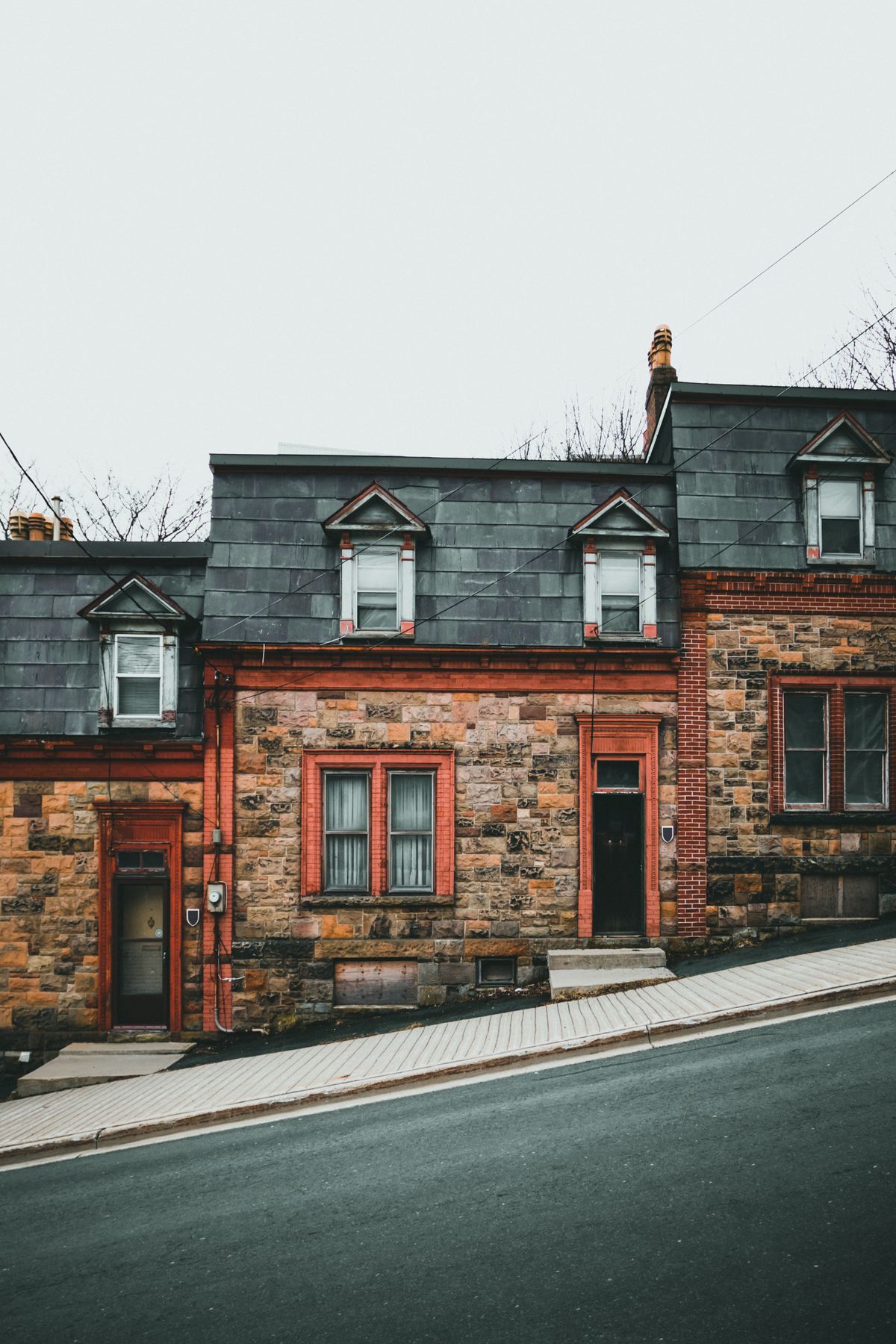
The wiring is one fact about the house. What the seller’s form asks, and when that form is mandatory, is What goes in the seller’s declaration when you sell a house in Quebec?. The ordinary costs of a Quebec sale are in The real costs of selling a house in Quebec. This page follows the Civil Code of Québec, the OACIQ form DV, the Régie du bâtiment du Québec, the Quebec Construction Code and Safety Code, the Corporation des maîtres électriciens du Québec, and Hydro-Québec’s low-voltage norm. It is general information from Bruce Malcolm, a private buyer. It is not legal advice, it is not electrical advice, and it is not a price.
Can you sell a Montreal house with knob-and-tube, aluminum wiring, or a fuse panel?
Yes. No statute cited on this page forbids the sale because the house still has knob-and-tube wiring, aluminum branch wiring, or a fuse panel. What the sale does not skip is saying what you know. A defect the buyer has been told about is not a hidden one. No statute cited here makes the electrical work a condition of the deed.
Do you have to replace the wiring before you sell?
Not on any page cited here. Chapter V of the Construction Code applies to construction work on an electrical installation. It is not a sentence that an untouched installation must be rebuilt on the day of a sale. Article 10.1 of the Safety Code points to the rules in force when the installation was built, and when a part was modified. The next section is where those articles are set out. A master electrician assesses the installation.
Does today’s electrical code force an old Montreal house up to the 2026 rules?
The chapter that governs the work is not a chapter that rewrites an untouched installation on the day of a sale. The Régie du bâtiment du Québec says Chapter V, Electricity, of the Quebec Construction Code has been in force since 1 October 2002, that the latest changes have been in force since 26 March 2026, and that the chapter is the Canadian Electrical Code, Part I, 25th edition, with the Quebec amendments, standard CSA C22.10:26 (Code de construction, RBQ). Article 5.02, in force on 26 March 2026, says that, subject to the exemptions in article 5.03, the chapter applies to all construction work on an electrical installation within the meaning of the code and covered by the Building Act (Construction Code, article 5.02). Article 5.03 exempts a lighting installation fixed to a pole used by a public distributor, an installation used to operate electric railways, including a metro, and a railway signalling and telecommunications installation. A house is not on that list (Construction Code, article 5.03).
The Safety Code is the other text, and two official pages do not say the same thing about a single-family house. The RBQ’s page “Ce qui s’applique” says Chapter II, Electricity, of the Safety Code sets an owner’s duties to keep electrical installations in good working order, safe and sanitary, and that its provisions apply to all electrical installations except those of single-family houses (Ce qui s’applique, RBQ). Article 9.2 of that code, as amended by decree 235-2026, says the chapter applies to every electrical installation subject to the Building Act, and the exceptions it names are the pole, the electric railway, and the railway signals. It does not name a single-family house (Safety Code, article 9.2). This page does not pick which sentence governs one house. Article 10.1, in the same decree, says that, subject to any stricter requirement in the chapter, the installation must conform to the regulatory requirements applicable when it was built, and that a part modified later must meet the requirements applicable at the time of the modification (Safety Code, article 10.1). That is a rule about the year of the work. It is not a rule that a 1940 house must match the 2026 code before a notary can sign.
An older RBQ interpretation, published 2 April 2012 and quoting the 2010 edition of the code, says the code then in force is not retroactive, and that an acquired right stays valid so long as that part of the installation is not the subject of work, or is only replaced by something similar. If that part is modified, the interpretation says the code in force at the time of the work applies (Mesures différentes et droits acquis, RBQ). The page is dated, and it quotes an edition that article 5.02 has since replaced. A master electrician reads the text that applies to the work. This page does not.
What do you declare, and what does the form not ask?
On the OACIQ PDF read for this page, marked DV 00001 and V24, the answers are to your knowledge and in good faith. The form does not have a box for knob-and-tube, for aluminum, or for the amperage. D10.2 asks whether there have been problems with the electricity, and the examples are a light that flickers abnormally, a fuse or a breaker that trips repeatedly, an outlet or a switch that does not work, or another problem you name. D10.5 asks whether the electrical panel has been changed and, if yes, in what year, with “don’t know” as a choice for the year. D14.5 asks whether anything else could affect the value, the income, the expenses, or the use. D15 is where the detail goes: the place, the year, and how the situation was dealt with (Déclarations du vendeur sur l’immeuble, form DV). When that form is mandatory is the declaration page already cited.
The OACIQ tells the public that every defect known to the owner goes in that form, that the form is mandatory when the seller deals with a broker, and that a sale without the legal warranty of quality still requires the defects to be disclosed in the form. The same page says you may be held responsible even if you were unaware of a latent defect at the time of the sale, and it gives improper electrical wiring as one example, with mould in the walls (Latent defect, OACIQ). That example is the OACIQ’s. It is not a finding that every old wire is a latent defect. A defect the buyer has been told about is the Civil Code’s distinction, in the next section.
What does the legal warranty still require?
Article 1726 says the seller warrants that, at the time of the sale, the property and its accessories are free of latent defects which render it unfit for the use for which it was intended, or which so diminish its usefulness that the buyer would not have bought it or paid so high a price if he had been aware of them. The seller is not bound to warrant a latent defect known to the buyer, or an apparent defect. An apparent defect is one a prudent and diligent buyer can perceive without an expert (Civil Code of Québec, article 1726). Article 1728 says that if the seller was aware of the latent defect, or could not have been unaware of it, the seller is bound not only to restore the price, but also to make reparation for the injury the buyer suffered (Civil Code of Québec, article 1728).
Article 1730 is a different person. It binds the manufacturer, any person who distributes the property under their name or as their own, and any supplier, in particular an importer, to a seller’s warranty (Civil Code of Québec, article 1730). The article names those persons. It does not name the owner who sells their house. Article 1732 says the parties may add to the warranty, diminish its effects or exclude it, but in no case may the seller exempt himself from liability for his personal acts or omissions (Civil Code of Québec, article 1732). Article 1733 says a seller may not exclude or limit liability unless the defects he was aware of, or could not have been unaware of, and which affect the right of ownership or the quality of the property, were disclosed. The same article makes an exception where a buyer buys at his own risk from a seller who is not a professional seller (Civil Code of Québec, article 1733). The exception is not a permission to stay silent.
Éducaloi says that, if the exclusion is real, the claim for a hidden defect is what is given up, and what remains is to show that the seller deliberately hid something so important that the buyer would not have bought, or would not have paid the same price (Immobilier : acheter sans garantie légale). The OACIQ tells the seller’s broker that the waiver will not protect the seller against an action for defects of which he was aware and which he should have disclosed (The legal warranty of ownership and quality). How the clause is written is Selling a house as-is in Quebec. A notary or a lawyer reads the clause. This page does not.
Who may assess the wiring and do the work?
A master electrician. The RBQ says that, for the single-family house you live in, you do not need a licence to build or alter the house and what is attached to it, except work on an electrical installation, a gas installation, or petroleum equipment. That work must be done by a contractor who holds the appropriate licence. The same page says work on an electrical installation must always be done by a contractor who holds the appropriate licence (Travaux que vous pouvez faire vous-même, RBQ). The Corporation des maîtres électriciens du Québec says that, under the Master Electricians Act and the Building Act, only master electricians may carry out electrical work or have it carried out, and that no one may do electrical work of any kind in their home, or elsewhere for someone else, unless they are an electrical contractor (Licence obligatoire, CMEQ).
The licence is not the RBQ’s. The RBQ says its mandate does not include issuing a contractor’s licence in electricity, and that electrical contractors must hold a licence that contains subcategory 16, issued by the CMEQ (Ce que la RBQ ne fait pas). Article 21 of the Master Electricians Act, in the text in force since 9 December 2011, covers practising in Quebec as a master electrician without being a member in good standing of the Corporation, or usurping the title (Master Electricians Act, article 21). You check the member in the CMEQ directory. A home inspection is not that licence.
Hydro-Québec’s norm E.21-10, the 10th updated edition, in force on 1 February 2021, applies to new installations and to any modification of the customer’s service connection. If the master electrician cannot meet the norm, the norm says to contact Hydro-Québec at 1 877 268-7268 before the work (Norme E.21-10). The norm is about a new installation or a change to the service. It is not a rule that an untouched 60-amp service must be changed before a deed. Only a master electrician does the work.
What are the ways to sell, including a direct sale as it stands?
Three paths are not the same promise. You can have a master electrician assess the installation and do the work you decide on. You can sell with the wiring as it is, and say what you know, on the form when that form is used and in writing when it is not. Selling without the legal warranty is a clause in the promise and the deed. It does not cover a problem you knew and did not disclose. A listing that sits because buyers walk away is a different problem (House not selling in Montreal? What are your options?).
A direct sale is a third path. Bruce Malcolm buys houses himself on the Island of Montreal and the surrounding areas. He holds no broker, agent, appraiser or inspector licence, and he is not an advisor. There is no inspection and no commission. An offer with no inspection condition does not, by itself, set aside the legal warranty of quality. You say what you know about the wiring when you send the address: knob-and-tube, aluminum, a fuse panel or the amperage if you know it, and any work a master electrician already did. He does not do the electrical work. The closing date is one you choose once the notary can sign. Sending the address starts a conversation (request an offer). The form does not commit you. A notary or a lawyer reads the deed. A master electrician reads the installation.
Can you sell?
What the source says. No statute cited here forbids the sale because of knob-and-tube, aluminum, or a fuse panel. You say what you know. A defect the buyer has been told about is not a hidden one. The electrical work is not a condition of the deed.
Where it is written. Civil Code, art. 1726
The 2026 code
What the source says. Chapter V applies to construction work on an electrical installation, in force with the 25th edition since 26 March 2026. Article 10.1 keeps the rules of the year the installation was built, and of the year a part was modified.
Where it is written. Arts. 5.02 and 10.1; RBQ
The form
What the source says. No box for the wire type or the amperage. Electrical problems at D10.2. A changed panel, and the year, at D10.5. The detail is D15.
Where it is written. OACIQ form DV, V24
Without legal warranty
What the source says. Articles 1726 and 1728 are the warranty. Article 1730 names the manufacturer, a distributor and a supplier, not the owner. A sale at the buyer’s risk does not excuse silence about a known defect.
Where it is written. Arts. 1730, 1732 and 1733; Éducaloi
Who does the work
What the source says. Only a master electrician, a member of the CMEQ, holding subcategory 16. The owner of the house does not. You check the member in the CMEQ directory.
Where it is written. RBQ; CMEQ; art. 21
Direct offer
What the source says. No inspection and no commission. An offer with no inspection condition does not, by itself, set aside the legal warranty of quality. Bruce does not do the electrical work.
Where it is written. The offer on this site
| Question | What the source says | Where it is written |
|---|---|---|
| Can you sell? | No statute cited here forbids the sale because of knob-and-tube, aluminum, or a fuse panel. You say what you know. A defect the buyer has been told about is not a hidden one. The electrical work is not a condition of the deed. | Civil Code, art. 1726 |
| The 2026 code | Chapter V applies to construction work on an electrical installation, in force with the 25th edition since 26 March 2026. Article 10.1 keeps the rules of the year the installation was built, and of the year a part was modified. | Arts. 5.02 and 10.1; RBQ |
| The form | No box for the wire type or the amperage. Electrical problems at D10.2. A changed panel, and the year, at D10.5. The detail is D15. | OACIQ form DV, V24 |
| Without legal warranty | Articles 1726 and 1728 are the warranty. Article 1730 names the manufacturer, a distributor and a supplier, not the owner. A sale at the buyer’s risk does not excuse silence about a known defect. | Arts. 1730, 1732 and 1733; Éducaloi |
| Who does the work | Only a master electrician, a member of the CMEQ, holding subcategory 16. The owner of the house does not. You check the member in the CMEQ directory. | RBQ; CMEQ; art. 21 |
| Direct offer | No inspection and no commission. An offer with no inspection condition does not, by itself, set aside the legal warranty of quality. Bruce does not do the electrical work. | The offer on this site |
Old wiring and a Montreal sale
Sources
- Civil Code of Québec, article 1726 (warranty of quality)
- Civil Code of Québec, article 1728 (seller who was aware or could not have been unaware)
- Civil Code of Québec, article 1730 (manufacturer, distributor, supplier)
- Civil Code of Québec, article 1732 (exclusion, and personal acts or omissions)
- Civil Code of Québec, article 1733 (disclosure, and a sale at the buyer’s risk from a non-professional seller)
- Construction Code, Chapter V, Electricity, article 5.02 (in force 26 March 2026)
- Construction Code, Chapter V, Electricity, article 5.03 (exemptions)
- Safety Code, Chapter II, Electricity, article 9.2 (decree 235-2026)
- Safety Code, Chapter II, Electricity, article 10.1 (rules of the year of construction or modification)
- Master Electricians Act, article 21 (text in force since 9 December 2011)
- RBQ, Code de construction, Chapter V (25th edition, in force 26 March 2026, CSA C22.10:26)
- RBQ, Ce qui s’applique (Construction Code and Safety Code)
- RBQ, Mesures différentes et droits acquis (published 2 April 2012, quoting the 2010 code)
- RBQ, Travaux que vous pouvez faire vous-même
- RBQ, Ce que la RBQ ne fait pas (subcategory 16 is issued by the CMEQ)
- CMEQ, Attention : licence obligatoire
- Hydro-Québec, Norme E.21-10, 10th updated edition, in force 1 February 2021 (PDF)
- OACIQ, Déclarations du vendeur sur l’immeuble, form DV (PDF)
- OACIQ, Latent defect is a very unpleasant surprise
- OACIQ, The legal warranty of ownership and quality
- Éducaloi, Immobilier : acheter sans garantie légale (page in French)
Questions people ask
Keep reading
- Selling a house as-is in QuebecAs-is means the legal warranty can be set aside. It does not mean a known defect can be hidden.
- What goes in the seller’s declaration when you sell a house in Quebec?On a brokered sale, the OACIQ form records what you know. A private sale has no mandatory form, and a sale without legal warranty is not a reason to hide a known defect.
- House not selling in Montreal? What are your options?A Montreal house that is not selling: September 2026 Centris figures, the exclusive brokerage contract, and options that do not promise a sale.
- The real costs of selling a house in QuebecCommission and its taxes, the mortgage penalty, the certificate, the notary, adjustments and capital gains, with who pays each.
- Can you sell a house with lead pipes in Montreal?Yes. A Montreal house with lead pipes, meaning a lead water service line, can be sold if you say what you know. The City’s replacement program is not a condition of the deed.
This is general information about how a sale usually works in Quebec. It is not legal, tax or financial advice, and it is not a promise about your price or your date. A notary — and, if your file needs it, a lawyer or a licensed insolvency trustee — applies the rules to your situation. Sending an address does not commit you to sell.