Flood zone
Can you sell a house in a flood zone in Quebec?
In shortYes, you can sell a house in a flood zone in Quebec, including as it stands. You say what you know: whether the lot is on the flood map, and whether water has been in the house. A sale at the buyer’s risk does not cover a flood you hid.
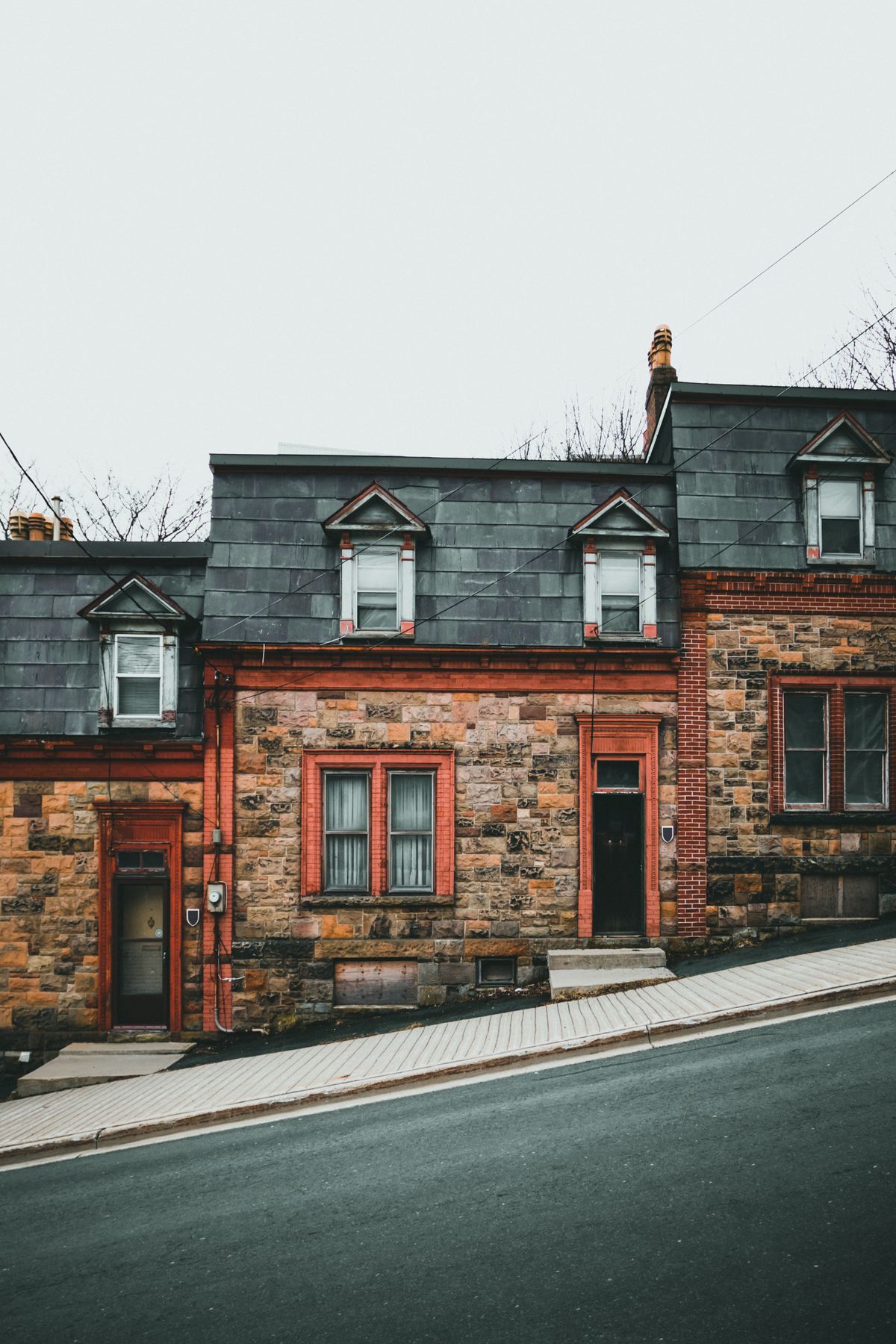
Sellers along the Rivière des Prairies, Lac des Deux Montagnes, Lac Saint-Louis and the St. Lawrence ask because the shore is the clue they can see. The map, not the borough name, says whether the lot is in a zone. This page is general information from Bruce Malcolm. It is not legal advice, and it is not a price.
Can you sell without moving the house out of the flood zone?
Yes. The articles on the warranty of quality do not make leaving the zone a condition of the sale. Quebec’s page on water environments, updated 31 July 2026, says that if your house is in a flood zone you will not be relocated. The same page says the transitional regime that began in March 2022 lifted the special intervention zones and ended the Protection Policy for Lakeshores, Riverbanks, Littoral Zones and Floodplains, and that this regime was replaced on 1 March 2026 by the modernized regulatory framework (Gestion des milieux hydriques, page in French).
Selling does not require the work first. Repair and maintenance of a house that already stands remain allowed. What else is allowed depends on the class on the map, and on the municipality, which can adopt stricter rules. The framework itself is the page on the regulatory scheme, updated 15 October 2026 (Cadre réglementaire, page in French).
How do you check whether this house is in a flood zone?
On the government’s page, with the address or the lot number. The map shows two things that are in force together: sectors where an older flood map is held by the municipality or the regional county municipality, and the flood zones on a new-generation map. As soon as a new-generation map is published for a sector, it replaces the older one. New-generation maps are published gradually (Check whether a property is located in a flood zone).
Where the map says a flood zone is possible, the page on the maps in force says the drawing is a general location, not the legal boundary, and that it has no legal value. Ask the municipality or the RCM. On an older map, a high-velocity zone, recurrence 0 to 20 years, has more than a 1-in-20 chance, more than 5 percent, of being flooded in a given year. Ice-jam flooding with ice movement is part of that zone. A low-velocity zone, 20 to 100 years, sits between 1 in 20 and 1 in 100, between 5 percent and 1 percent. A new-generation map uses four intensity classes, very high, high, moderate and low, from the chance of at least one flood over 25 years and from the depth of water. The class table is on that page (Cartographies en vigueur, page in French).
A lot can lie partly in the zone while the house does not. The government’s 2026 guide says a land surveyor then has to delimit the zone before you do work. The same guide says the red grid on the interactive map does not, by itself, mean the property is in a flood zone, or that a new map will put it there (S’adapter aux inondations, PDF in French).
On the Island of Montreal, the Communauté métropolitaine de Montréal was mandated by the Ministère de l’Environnement, de la Lutte contre les changements climatiques, de la Faune et des Parcs to produce the new maps for its territory. Its note of 25 February 2026 lists the Rivière des Prairies, Lac des Deux Montagnes, Lac Saint-Louis and the St. Lawrence among the 14 water bodies that mapping was prepared for. Publication stays gradual, and an older map keeps its force until the new one for that watercourse is published. That is why the question comes up in Pierrefonds-Roxboro, L’Île-Bizard–Sainte-Geneviève, along the Ahuntsic-Cartierville shore and in Rivière-des-Prairies–Pointe-aux-Trembles. Those shores are on that list. The borough name is not the finding (Zones inondables et crues printanières, CMM).
The borough of Pierrefonds-Roxboro, on a page updated 26 June 2026, tells residents to check the Quebec government map. It also says a home flooded in 2017 or 2019 by the Rivière des Prairies, by the water table, or in the basement should be treated as exposed to spring flooding. The same page still asks whether the house is on the special-intervention-zone map. Those zones were lifted in March 2022 (Crue printanière, Pierrefonds-Roxboro).
What do you have to say, and what does the seller’s declaration ask?
Article 1726 binds the seller to warrant that the property and its accessories are, at the time of the sale, free of latent defects which render it unfit for the use for which it was intended, or which so diminish its usefulness that the buyer would not have bought it or paid so high a price if he had been aware of them. The seller is not bound for a latent defect known to the buyer, or for an apparent defect. An apparent defect is one a prudent and diligent buyer can perceive without the need to resort to an expert (Civil Code of Québec, article 1726). Article 1728 says that if the seller was aware of the latent defect, or could not have been unaware of it, he is bound to restore the price and to make reparation for the injury suffered by the buyer (Civil Code of Québec, article 1728). A line on a flood map is a public restriction. A past flood you know about is a fact about the house. This page does not decide which article a court would apply to your file. It says you put both in the open.
On a brokerage sale, the form is Déclarations du vendeur sur l’immeuble. The copy read for this page is the OACIQ form marked V24, June 2022, for a chiefly residential immovable of fewer than five dwellings, excluding divided co-ownership. The form says it is used when a brokerage contract for the sale is entered into with an individual (Déclarations du vendeur, form DV, PDF). Question D2.9 asks whether public-law restrictions apply, and one line is “l’immeuble est en zone inondable,” yes or no. The detail goes in D15, which asks you to name the declaration number. The form says a positive answer to D2.9 may mean a new certificate of location is required if the certificate you have does not reflect that change. D4.1 asks whether there has been water infiltration, and where. D3.6 asks whether water accumulates on the lot from time to time. D14.1 asks whether the immovable has had damage from an event such as an ice storm, wind, a flood, a fire, or another event, beyond what was already declared. D2.12 asks whether an insurer, the municipality or the government has sent a notice of non-compliance. D2.13 asks whether an insurer has ever refused to insure the immovable, in whole or in part. D2.14 asks whether an insurer has ever refused to indemnify damage to it.
The OACIQ’s page for the public says that form is mandatory for the sale, by a natural person, of a chiefly residential immovable containing fewer than five dwellings, and it names a flood-prone area as something the seller’s broker verifies so the written answers stay accurate (A report card on a property). A further OACIQ page says an owner who has been flooded has reason to keep the consequences and the steps taken, with invoices, photos and videos, and that on a later brokerage sale the seller’s broker has to see that this is on the form before a buyer decides (Transaction sur une propriété inondée, page in French). Without a broker, the form is not what creates the duty. Articles 1726 and 1728 are. The other papers a Quebec closing uses are in What documents do I need to sell a house in Quebec?.
Does a sale at the buyer’s risk cover a flood you knew and did not say?
No. Article 1733 says a seller may not exclude or limit his liability unless he has disclosed the defects of which he was aware or could not have been unaware and which affect the right of ownership or the quality of the property. An exception may be made where a buyer buys property at his own risk from a seller who is not a professional seller (Civil Code of Québec, article 1733). Article 1732, in the wording in force on the English consolidation since 6 April 2016, says the parties may add to the legal warranty, diminish its effects or exclude it, but the seller may not exempt himself from liability for his personal acts or omissions (Civil Code of Québec, article 1732).
Éducaloi says the promise to purchase and the deed must then say the sale is made “sans aucune garantie légale, à vos risques et périls,” and that the buyer has to be told before signing. If the warranty is excluded, Éducaloi says the remaining recourse is to show that the seller deliberately hid a truth so important that, had the buyer known it, the buyer would not have bought, or not at the same price. Éducaloi also says the warranty cannot be used to require repair of a problem the seller declared (Immobilier : acheter sans garantie légale, page in French). An offer with no inspection condition does not, by itself, set aside the warranty of quality. The clause in the deed is what the notary reads. How that clause works is in Selling a house as-is in Quebec.
What do the rules allow for repair, a new house, or rebuilding?
Ask the municipality before the work. Quebec has given municipalities the application of the rules for residential buildings and for a large share of the work on a residential lot. The common rules are in the regulation on activities under municipal responsibility in water environments and on flood-protection works. Municipalities must apply them and may adopt stricter by-laws. Where a new-generation map is not yet published, the older map in force applies (Réaliser des travaux, page in French).
The government’s 2026 guide says you can keep repairing and maintaining a building that is in a flood zone. Its overview marks maintenance, for example a roof, the windows or the kitchen, as allowed with conditions or restrictions in every class, including the bank and the littoral. The notes say maintenance does not require a municipal permit, construction does, and maintenance and construction of a residential building are exempt from a ministerial authorization. The same overview marks reconstruction after a flood, a submersion or channel migration as not allowed in a very high class, in a high-velocity zone, in a short-term migration zone, on the bank and in the littoral, and as allowed only with conditions or restrictions in a high, moderate or low class, in a low-velocity zone and in a long-term migration zone. Reconstruction after another disaster, such as a fire, is marked allowed with conditions or restrictions in every column. Voluntary reconstruction, with no disaster, follows the not-allowed columns of reconstruction after a flood. The two allowed marks are “with conditions” and “with restrictions.” The municipality says which applies (S’adapter aux inondations, PDF in French).
A new residence is prohibited, on the works page, in the littoral, on the bank of 10 or 15 metres, in a very high, high or moderate class on a new map, in a high-velocity zone on an older map, and in a short-term channel-migration zone. It may be permitted, with conditions, for example in a sector that is already built, in a low class, in a low-velocity zone, and in a long-term migration zone. A new shed, detached garage or similar outbuilding may be permitted outside a very high class, with the area limited to 50 square metres, and it is prohibited in a very high class, on the bank, in the littoral and in a short-term migration zone. Replacing the foundations is major work on that page: the building has to be adapted to the flood risk, and a competent professional has to confirm that people and property are safe. Water that came through the foundation, as distinct from the zone on the map, is a separate question (Can you sell a house with foundation problems in Quebec?).
What do the cited pages say about insurance, disaster assistance and a mortgage?
Only what they say. The 2026 Quebec guide says some financial institutions may, as their own business decision, set tighter conditions on a mortgage for a building in a flood zone. The government does not intervene in that decision, and the guide tells you to ask the institution. It does not say a lender must refuse. No page cited here states a rule that a loan is refused because the house is in a flood zone. The same guide says insurers judge flood risk with their own tools, alongside the published maps, that the insurance available in Quebec generally does not cover flood risk, and that some insurers offer an endorsement that pays in that case (S’adapter aux inondations, PDF in French).
The Insurance Bureau of Canada says a standard home policy typically does not cover overland flooding, which it describes as a body of fresh water overflowing onto dry land. It says optional residential overland-flood coverage is now offered by many insurers for the majority of homes across the country, based on risk, commonly together with optional sewer-backup coverage, and that cost and availability are a question for the insurer about that home (Water damage and flood protection, IBC). The Bureau d’assurance du Canada’s Quebec page says this protection has been offered by some insurers in Quebec since 2017, that the product, the underwriting and the cost vary by insurer, and that it is generally added by endorsement, often one that already covers sewer backup or water coming in through the ground. If you hold the cover, the insurer indemnifies a flood. If you do not, or if it does not cover the whole loss, you may apply to the public program. You do not collect both for the same item (Inondations printanières, BAC, page in French).
The program’s name on Quebec’s site is the Programme général d’assistance financière lors de sinistres. The page says it is last-resort help for an owner or a tenant of a principal residence, for a loss that the policies generally purchased in Quebec do not cover, and that it does not stand in for an insurance contract. Speak to the insurer before you apply. An eligible flood is one in which a nearby watercourse has overflowed. Water that then enters by a sewer backup or by infiltration is eligible. A sewer backup or an infiltration with no overflow is not. Damage from violent wind is not (Aide financière pour propriétaires et locataires, page in French).
The ministry’s interpretation guide, June 2025, adds a limit the public page does not spell out. The owner of a residence built after 10 April 2019 in a high-velocity zone, an open-water flood of recurrence 0 to 20 years, is not eligible. A tenant whose dwelling is in that building may still be. The guide also says that since 10 April 2019 the assistance paid for damage to a residence adds up with each new disaster, and a change of owner does not wipe the total. If the running total reaches the program’s limit, the options become a departure allowance, moving the home, or flood-proofing it. A home that already received help after 10 April 2019 to be flood-proofed or moved is not eligible for new help with damage to the building. Aid follows the address, not the owner. The guide still uses the older map’s name. It does not restate the rule in the four new classes. Where an older map is still the map in force, high-velocity is the zone it names (Guide d’interprétation, PDF in French).
This page does not say what a flood zone does to a price. The municipal roll answers a different question (Is my municipal assessment what my house is worth in Montreal?). What a seller pays at the notary, apart from any flood question, is in The real costs of selling a house in Quebec.
Can a direct buyer make a firm offer for the house as it stands?
Yes. That is one way to sell. A promise that still depends on an inspection, or on a loan, can reopen the price or end when the report or the lender names the zone. A direct buyer who takes the house as it stands, and whose offer has no inspection condition, is not that promise. What you know is still said. An offer with no inspection condition does not, by itself, set aside the legal warranty of quality.
Bruce Malcolm buys houses himself on the Island of Montreal and the surrounding areas. He holds no broker, agent or appraiser licence, and he is not an advisor. There is no inspection and no commission. You say what you know about the zone, and about any water that has entered, when you send the address. The closing date is one you choose once the notary can sign. Sending the address starts a conversation (request an offer). The form does not commit you.
Sell the house
What the source says. You can. A mapped house is not relocated. The modernized framework replaced the transitional regime on 1 March 2026.
Where it is written. Québec.ca, water environments, updated 31 July 2026
Check the lot
What the source says. Address or lot number. A new map replaces the old one when it is published. “Possible flood zone” is not the legal line.
Where it is written. Québec.ca, check a property, and the maps in force
Say it
What the source says. D2.9 asks if the immovable is in a flood zone. D14.1 asks about flood damage. D4.1 asks about water infiltration. D15 is the detail.
Where it is written. OACIQ form DV, V24, June 2022
Hid it
What the source says. No exclusion unless the known defect was disclosed. The exception is a non-professional sale at the buyer’s risk. Your own acts stay yours.
Where it is written. Civil Code, arts. 1733 and 1732
Work
What the source says. Maintenance is allowed. A new house is prohibited in a very high, high or moderate class, and in a high-velocity zone. Reconstruction after a flood is not allowed in a very high class or a high-velocity zone. The municipality can be stricter.
Where it is written. Québec.ca, doing the work, and the 2026 guide
Insurance and help
What the source says. Overland flood is generally an endorsement, not the basic policy. The public program is last resort. An owner of a house built after 10 April 2019 in a high-velocity zone is not eligible.
Where it is written. IBC, BAC, Québec.ca, and the June 2025 guide
Direct firm offer
What the source says. No inspection condition. What you know is still said. The date is real when the notary can sign.
Where it is written. A sale to Bruce
| Question | What the source says | Where it is written |
|---|---|---|
| Sell the house | You can. A mapped house is not relocated. The modernized framework replaced the transitional regime on 1 March 2026. | Québec.ca, water environments, updated 31 July 2026 |
| Check the lot | Address or lot number. A new map replaces the old one when it is published. “Possible flood zone” is not the legal line. | Québec.ca, check a property, and the maps in force |
| Say it | D2.9 asks if the immovable is in a flood zone. D14.1 asks about flood damage. D4.1 asks about water infiltration. D15 is the detail. | OACIQ form DV, V24, June 2022 |
| Hid it | No exclusion unless the known defect was disclosed. The exception is a non-professional sale at the buyer’s risk. Your own acts stay yours. | Civil Code, arts. 1733 and 1732 |
| Work | Maintenance is allowed. A new house is prohibited in a very high, high or moderate class, and in a high-velocity zone. Reconstruction after a flood is not allowed in a very high class or a high-velocity zone. The municipality can be stricter. | Québec.ca, doing the work, and the 2026 guide |
| Insurance and help | Overland flood is generally an endorsement, not the basic policy. The public program is last resort. An owner of a house built after 10 April 2019 in a high-velocity zone is not eligible. | IBC, BAC, Québec.ca, and the June 2025 guide |
| Direct firm offer | No inspection condition. What you know is still said. The date is real when the notary can sign. | A sale to Bruce |
What a flood-zone question changes in a Quebec sale
Sources
- Gouvernement du Québec, Gestion des milieux hydriques (updated 31 July 2026)
- Gouvernement du Québec, Cadre réglementaire (updated 15 October 2026)
- Gouvernement du Québec, Check whether a property is in a flood zone (updated 30 July 2026)
- Gouvernement du Québec, Cartographies en vigueur (updated 28 August 2026)
- MELCCFP, S’adapter aux inondations : comprendre et agir (PDF, legal deposit 2026)
- Gouvernement du Québec, Réaliser des travaux (updated 14 July 2026)
- Communauté métropolitaine de Montréal, Zones inondables et crues printanières (25 February 2026)
- Ville de Montréal, Crue printanière, Pierrefonds-Roxboro (updated 26 June 2026)
- Civil Code of Québec, article 1726
- Civil Code of Québec, article 1728
- Civil Code of Québec, article 1732 (English consolidation, in force 6 April 2016)
- Civil Code of Québec, article 1733
- Éducaloi, Immobilier : acheter sans garantie légale
- OACIQ, Déclarations du vendeur sur l’immeuble, form DV, V24 June 2022 (PDF)
- OACIQ, A report card on a property
- OACIQ, Transaction sur une propriété inondée
- Insurance Bureau of Canada, Water damage and flood protection
- Bureau d’assurance du Canada, Inondations printanières
- Gouvernement du Québec, Aide financière pour propriétaires et locataires
- Ministère de la Sécurité publique, Guide d’interprétation pour les particuliers (June 2025, PDF)
Questions people ask
Keep reading
- Selling a house as-is in QuebecAs-is means the legal warranty can be set aside. It does not mean a known defect can be hidden.
- Can you sell a house with foundation problems in Quebec?You can sell a Quebec house with a foundation problem. Say what you know. A sale at the buyer’s risk does not cover a defect you hid.
- What documents do I need to sell a house in Quebec?The deed, a current certificate of location, tax bills and your mortgage balance are the core. Here is what to do when one is missing.
- The real costs of selling a house in QuebecCommission and its taxes, the mortgage penalty, the certificate, the notary, adjustments and capital gains, with who pays each.
- Is my municipal assessment what my house is worth in Montreal?Not exactly. The 2026-2028 roll reflects 1 July 2024 and stays fixed for three years. Here is why your price can differ, how it affects the welcome tax, and how a review works.
This is general information about how a sale usually works in Quebec. It is not legal, tax or financial advice, and it is not a promise about your price or your date. A notary — and, if your file needs it, a lawyer or a licensed insolvency trustee — applies the rules to your situation. Sending an address does not commit you to sell.